
Last updated
How Often Does a Septic Tank Need Pumping?
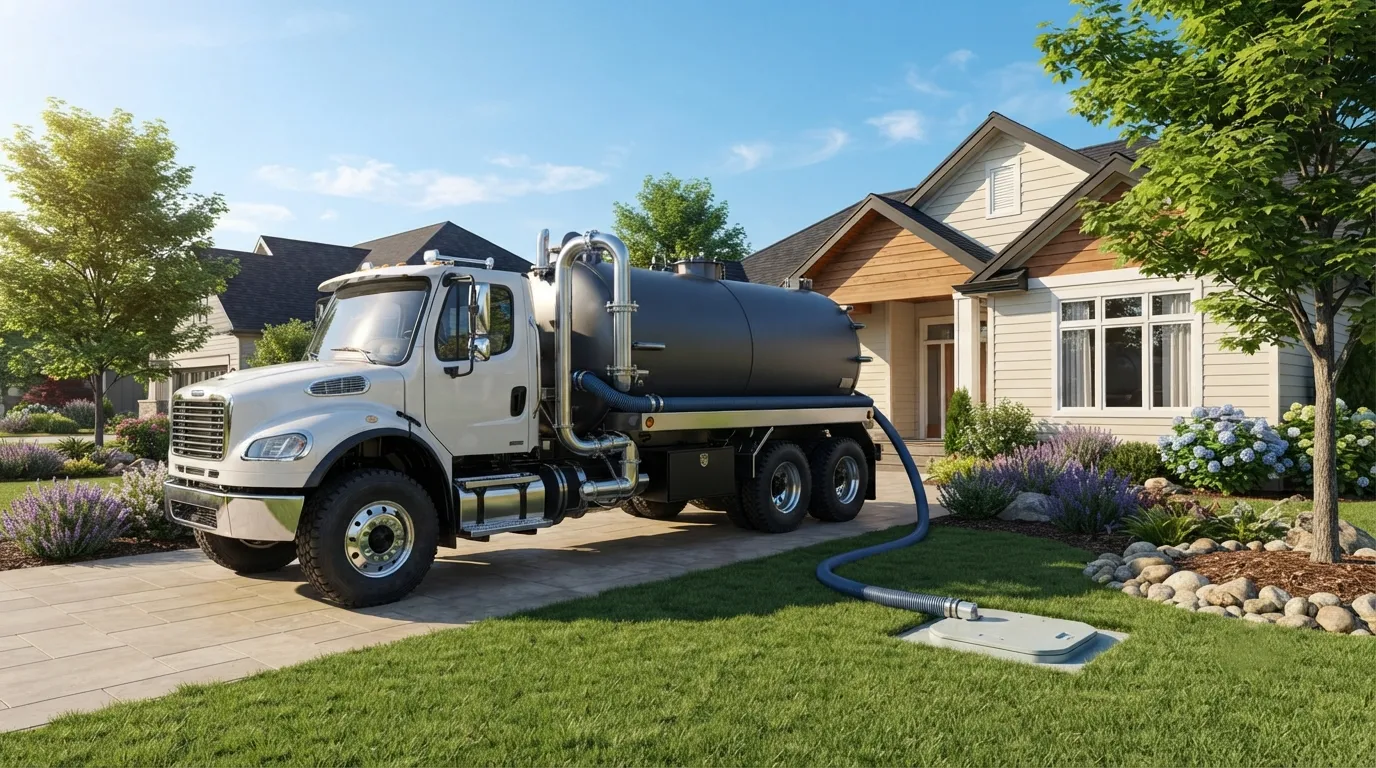
Every 3 to 5 years is the baseline for a residential tank, and that number comes straight from tank size against household size, not a fixed calendar. A family of six in a small tank fills faster than a couple in an oversized one, a question that comes up often enough that septic tank warning signs is worth a look before symptoms start. If you are unsure which end of that range applies to your Cary property, how often to pump a septic tank walks through the math in more detail. Grease traps run on a different clock entirely: a grease interceptor gets pumped once fats, oils, grease and solids reach 25 percent of the liquid depth, which for a busy kitchen can mean monthly service rather than years. Restaurants and event kitchens should see grease trap pumping as a separate line item from tank pumping. Waiting too long risks a backup into the house or a saturated drain field, and drain field repair costs far more than a pumping visit ever will. We track service intervals for repeat customers so nobody in Cary has to remember the date themselves, the same way we schedule portable restroom rental service on a recurring basis.
What Are the Warning Signs of a Full Septic Tank?
Slow drains in multiple fixtures at once, gurgling in the pipes, standing water near the tank lid, and a sewage smell in the yard all point to a tank that needs attention now, not next month. Any one of these alone might be a clog, similar to how a single overused unit on a standard porta potty rental job might just need an extra cleaning, not a swap. Several together usually mean the tank is at capacity or the drain field is struggling. Septic tank warning signs covers the full list if you want to check symptoms before calling. Green, spongy grass over the drain field in the middle of a dry North Carolina summer is another tell, since it means liquid is surfacing where it shouldn't. If you're seeing backup into a tub or floor drain, treat that as urgent. Emergency septic service exists for exactly that scenario, and we'd rather get a truck out same-day than let a customer's yard turn into a bigger job. Cary clay soil doesn't drain quickly once a field is compromised, which makes early warning signs worth acting on fast, the same urgency that applies to disaster relief sanitation setups after flooding.

What Does a Septic Pumping Service Include?
A standard visit means locating and opening the tank, pumping the contents, checking baffles and the tank walls for damage, and confirming the outlet isn't blocked before we close it back up. We're not just pulling liquid; we're checking whether the system is doing its job, the same inspection mindset we bring to ADA accessible porta potty units before they go out. On a construction site or renovation project where the home septic system is offline, a holding tank rental fills the gap so crews still have working sanitation. That pairs well with construction site services for jobs that also need portable toilet rental, a temporary fence rental around the work zone, a roll-off dumpster rental for debris, or a storage container rental for tools and materials. For general sanitation counts on an active jobsite, OSHA 1926.51(c) sets facility ratios based on crew size, and any handwashing setup on site should meet 29 CFR 1910.141(d)(2), which requires soap and towels or a hand-drying device, not sanitizer alone. If your project also involves paint, coatings or pesticide work, OSHA 1926.51(f)(1) requires washing facilities specifically for that contaminant exposure. We handle septic and portable sanitation together often enough that construction dumpster rental, temporary power pole, and light tower rental tend to come up in the same conversation.
How Much Does Septic Tank Pumping Cost?
| service | duration | low | typical | high |
|---|---|---|---|---|
| septic pumping | day | $150 | $250 | $300 |
| septic pumping | weekend | $50 | $100 | $150 |
Standard day-rate pumping in Cary runs $150 to $300, with most jobs landing near $250 for a typical residential tank. Weekend service carries its own pricing rather than a discount off the weekday rate, generally $50 to $150 depending on scope. Larger tanks, harder-to-reach access lids, or a tank that hasn't been pumped in longer than the usual 3 to 5 year window can push a job toward the higher end. For a full cost breakdown by tank size and access difficulty, see septic tank pumping cost. We also run septic tank cleaning for tanks that need more than a routine pump-out, and if you're weighing a septic system against a rental holding tank for a temporary situation, that comparison lives on holding tank rental as well. Nobody wants a surprise invoice, so we quote the job after seeing the tank, not before, the same approach we take on porta potty rental cost quotes for events.
What Happens During Holding Tank Service?
A holding tank has no drain field and no treatment process; it simply stores waste until it's pumped out, which makes it a fit for construction trailers, remote sites, or a home mid-septic-repair. Service means we pump the tank on a schedule that matches usage, not a fixed calendar like a residential septic system. High-use sites might need pumping weekly; a lightly used office trailer might go longer. Holding tank rental covers setup and scheduling in more detail. On multi-service jobsites we're often delivering a holding tank alongside a restroom trailer rental, an 8 stall restroom trailer, or a 4 stall restroom trailer for larger crews, coordinating pump-outs with a handwashing station rental nearby so nothing runs over capacity mid-shift. ANSI/PSAI Z4.3 sets a baseline service interval of one visit per week for up to 10 users over a 40 hour week, which is a reasonable starting point for scheduling holding tank pumping on a steady-crew jobsite, though heavier use shortens that interval fast.

Do You Offer Emergency Septic Pumping?
Yes, and a backup at 9pm doesn't get a callback tomorrow. We treat sewage backing up into a home or business as a same-day dispatch, not a scheduled visit. Emergency septic service is built for exactly this: no advance notice, no waiting through a holiday weekend. Cary sits at the center of our service area, and we reach nearby communities fast too. Morrisville is 4.3 miles southeast, Apex sits 5.5 miles north, and Garner is 5.5 miles southeast, so an emergency call from any of those spots doesn't mean a long wait. Holly Springs at 7.2 miles southeast and Durham at 8.6 miles south fall inside that same quick-response radius. Further out, Fuquay-Varina at 12.2 miles northeast, Chapel Hill at 13.1 miles north, and Carrboro at 19.1 miles north still get same-day response for true emergencies, just with a longer drive built into the timeline. Check service areas for the full map, browse the frequently asked questions page for common scheduling questions, read more about how we run emergency calls, or go straight to request a quote if you need someone out today.
How much does septic tank pumping cost near me in Cary?
Standard day-rate pumping runs $150 to $300, typically around $250 for a residential tank. Tank size, access difficulty, and how long it's been since the last pump-out all affect where a job lands. See septic tank pumping cost for the full breakdown by scenario.
How often should a 1,000 gallon septic tank be pumped?
A 1,000 gallon tank is generally pumped every 3 to 5 years, driven by tank size against household size. A larger household on that same tank size will need more frequent service. How often to pump a septic tank covers the variables in more depth.
What are the warning signs I need septic pumping now?
Slow drains, gurgling pipes, standing water near the tank, and sewage odor in the yard are the main signs. Several symptoms together usually mean the tank has reached capacity. Full list at septic tank warning signs.
Can I get emergency septic pumping the same day in Cary?
Yes. Backups and overflows get same-day dispatch, not a scheduled slot. Emergency septic service covers response across Cary and nearby towns like Morrisville and Apex without a long wait.
What is the difference between septic pumping and a holding tank?
A septic tank treats waste on-site through a drain field; a holding tank just stores waste for pump-out with no treatment process. Construction sites and temporary setups typically use a holding tank rental instead of a permanent septic system.
Does grease trap pumping work the same as septic tank pumping?
No. A grease interceptor gets pumped once fats, oils, grease and solids reach 25 percent of the liquid depth, often monthly for busy kitchens, while a residential tank runs on a multi-year cycle. See grease trap pumping for commercial kitchen scheduling.
Next step
Get a delivery date
Tell us the address, the dates and the headcount. We size the order and confirm the route.