Last updated
What Does a Farm Need to Meet Field Sanitation Rules?
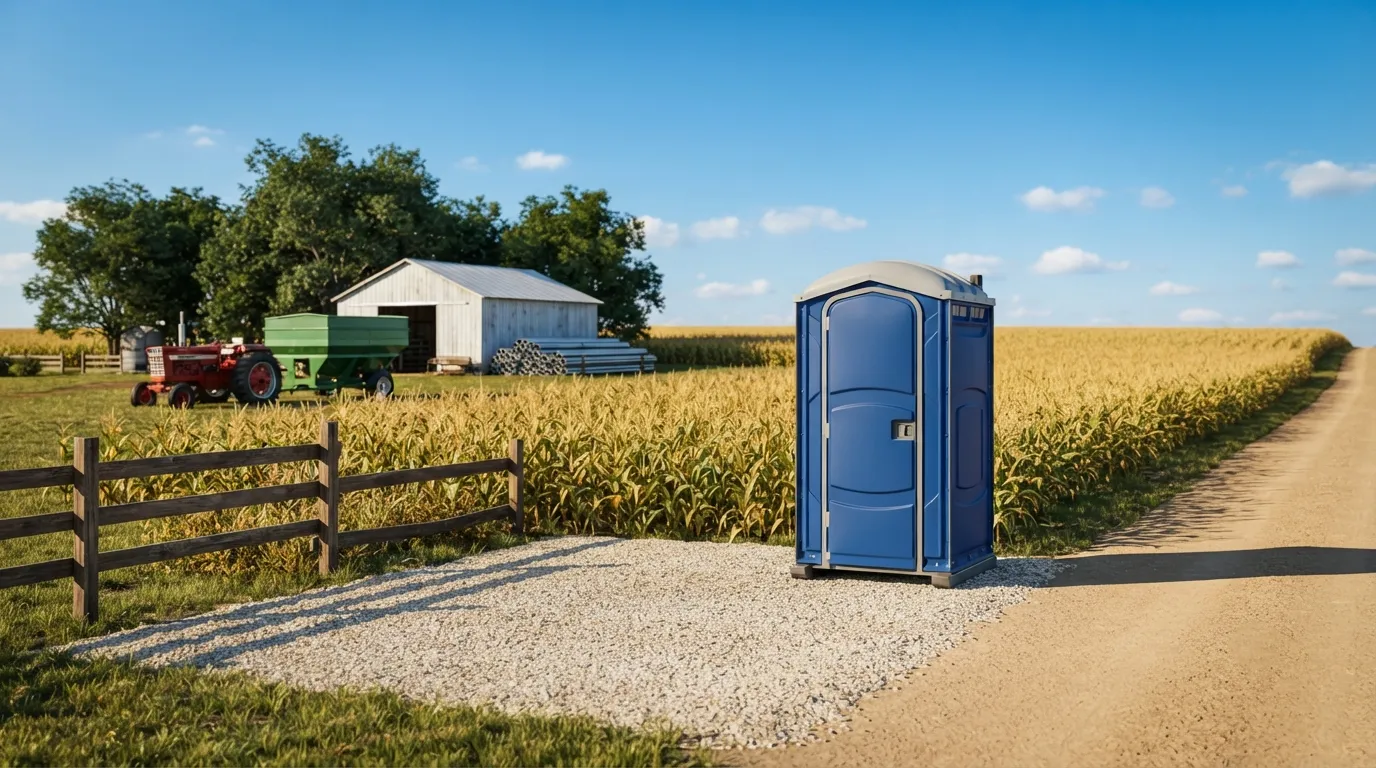
Farm operations with hand-labor employees fall under OSHA 1928.110, which calls for potable water, toilet facilities and handwashing within a quarter mile of where people are working. That is different from the construction standard, 1926.51(c), which many crew leads in Cary already know from job sites. A farm running crews across several fields usually needs more than one unit just to keep every worker inside that quarter mile radius, especially on larger acreage outside town toward Apex, 8.2 miles southwest, or Holly Springs, 15.8 miles south. Cary Porta Pros places standard porta potty rental units at field edges and moves them as harvest zones shift. Each standard unit holds 60 to 70 gallons and sits about 44 by 48 inches on the ground, small enough to fit on a flatbed or tuck against a fence line without blocking equipment. Handwashing is a separate requirement from the toilet itself. Under 29 CFR 1910.141(d)(2), washing facilities need soap and towels or a hand-drying device; a bottle of sanitizer on a post does not satisfy it. We pair every farm order with a handwashing station rental or a portable sink rental so packing sheds and field crews both have real handwashing, not a workaround. Farms that also run a roadside stand or agritourism event during harvest season should look at festival restroom rental or county fair restrooms for the public-facing side, since visitor counts push you past field-worker ratios fast.
How Many Units Does a Farm Operation Need?
Crew size and layout decide the count faster than acreage does. A 15-person picking crew working one field needs one unit inside a quarter mile, per 1928.110; the same crew split across three distant fields needs three. Farms near Morrisville, 5.7 miles north, and Garner, 15.5 miles southeast, often stagger planting so labor moves week to week, and we build delivery schedules around that instead of dropping every unit on day one. Our porta potty rental checklist walks through crew size, field spacing and duration before we quote anything. For farms hiring outside crews for a short window, a porta potty rental per day rate makes more sense than a season-long commitment. Operations running the same crew through a full growing season usually save with a monthly porta potty rental instead. Livestock operations with a smaller, fixed labor force sometimes need just one or two units near the barn or milking parlor, plus a handwash station at the entrance. Packing houses and sorting sheds count as fixed work areas too, and those can follow general industry ratios under OSHA 1910.141(c)(1)(i) rather than the field standard, depending on how the labor is structured. If you are not sure which ratio applies to your operation, our OSHA portable toilet requirements page breaks down the difference between the construction, general industry and field sanitation standards side by side.
Should I Rent by the Day, Week or Season?
Duration should match your labor calendar, not a guess. Short pick windows favor a daily rate; season-long crews favor a monthly rate, which runs cheaper per day than renting week to week the whole time. Here is how standard unit pricing compares:
| Duration | Low | Typical | High |
|---|---|---|---|
| Day | $100 | $150 | $350 |
| Week | $130 | $200 | $500 |
| Month | $125 | $200 | $325 |
Delivery is priced separately and depends on distance and how many stops we make in one trip; a farm near Fuquay-Varina, 21.9 miles south, costs more to reach than one just outside Cary proper. If your farm needs a unit that flushes and feels closer to a real bathroom for family labor or a farm stand office, look at the deluxe flushable porta potty line. Farms with an aging worker or a family member using a wheelchair should ask about an ADA accessible porta potty; ADA Standards 213.2 calls for at least one accessible unit in any cluster, and 304.3.1 requires a 60 inch turning circle inside it. Septic-side needs come up often on working farms too. If your farmhouse or packing operation runs off a septic system, our septic pumping service and how often to pump a septic tank pages cover the 3 to 5 year cycle most residential tanks run on. Grease traps from a farm kitchen or food stand need separate attention; see grease trap pumping for when that is due. For a full breakdown of what drives cost, porta potty rental cost covers delivery fees and service intervals in more depth.
How far in advance should I book for harvest season?
Book as soon as you know your crew size and start date, ideally a few weeks out. Harvest season pulls demand across Cary and nearby towns at once, and popular delivery windows fill first. Early booking also gives us time to plan routes if your fields sit near Durham, 18.2 miles north.
Can one unit serve multiple fields on the same farm?
Only if every field stays within a quarter mile walk of it, per OSHA 1928.110. Fields farther apart each need their own unit. We can help you map field distances during the quote call.
Do I need a handwashing station separate from the toilet?
Yes. Toilet units and handwashing are two separate requirements under field sanitation rules. Soap and towels are required by 29 CFR 1910.141(d)(2); sanitizer alone does not count as compliant handwashing.
What if my crew works with pesticides or herbicides?
Washing facilities are required under OSHA 1926.51(f)(1) wherever crews apply pesticides, herbicides or similar chemicals. That is separate from routine field sanitation and applies any day chemical application happens.
Can Cary Porta Pros service farms outside Cary itself?
Yes. We regularly serve farms around Apex, Morrisville, Garner and Holly Springs, and can quote farms farther out toward Chapel Hill or Carrboro on request. Delivery distance affects the fee, so ask for a route-specific quote.
Next step
Get a delivery date
Tell us the address, the dates and the headcount. We size the order and confirm the route.